Seeing as a Field
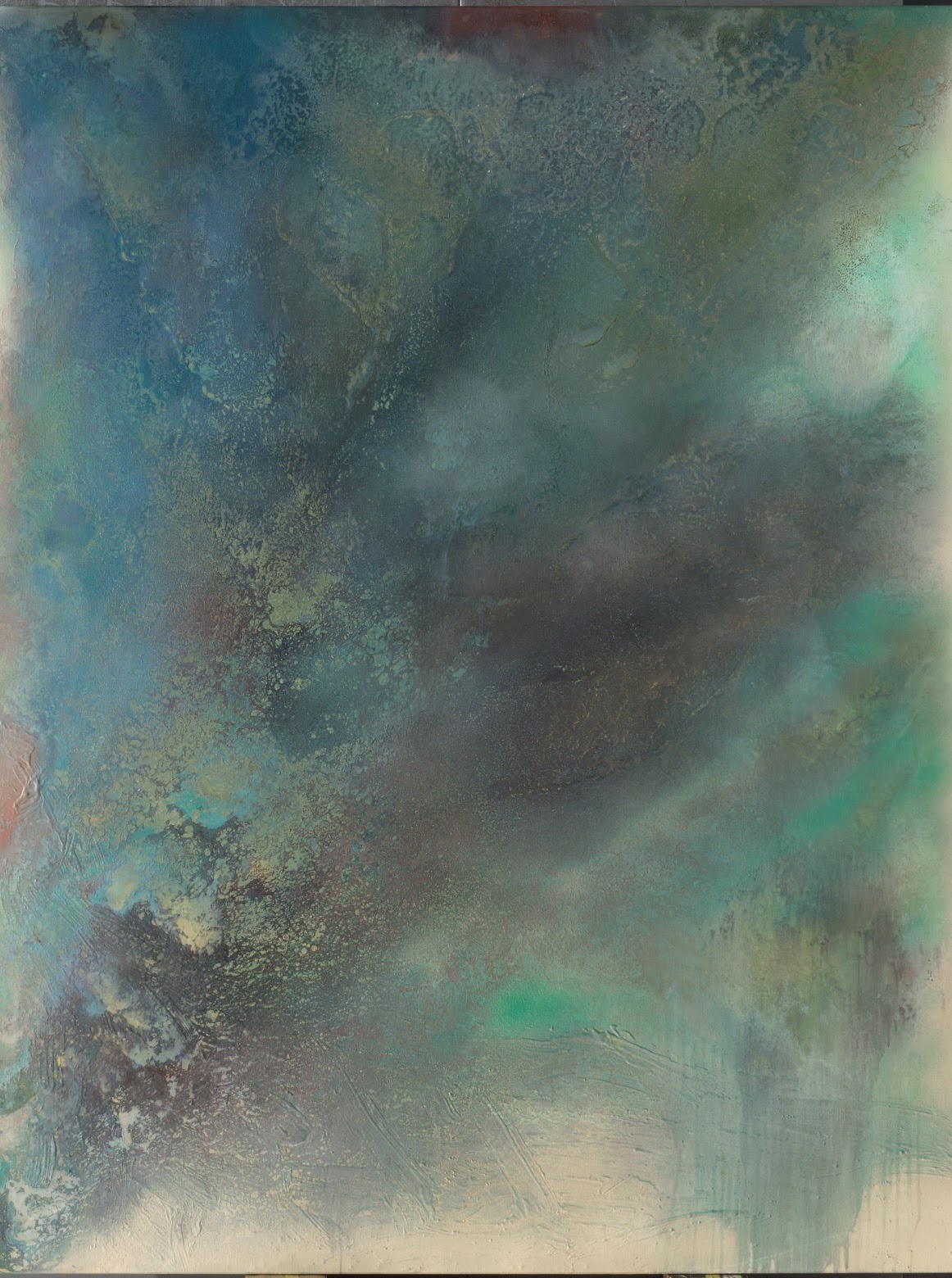
This work, completed around 2015, shows that Chen Tao-Ming’s practice has entered another phase.
Here, color no longer serves the construction of form. There is no longer a clear structural order, nor any recognizable figure to rely on. The interfaces and masses that once provided support gradually dissolve, giving way to a more open perceptual condition.
Color no longer forms objects, but begins to generate space.
You may find that there is no longer a place for your gaze to settle. Your eyes drift and move across the surface. Front and back, depth and flatness, are no longer fixed relations, but continue to shift as you look.
Traces still remain, but they no longer point toward the formation of forms. They are closer to residues of a process. Time is no longer condensed into structure, but unfolds as an ongoing state.
When viewed through chromatic 3D glasses, these loosened relations are further amplified. Differences in color bring forth a sense of spatial depth, but this space is unstable—it changes as your gaze moves.
In the lower right corner, a distinct trace of operation remains.
Within an otherwise seemingly self-generated surface, this area appears to retain a small portion of human intervention that has not been fully dissolved. It does not form a shape, nor does it act as a focal point, yet it causes your gaze to pause slightly.
Within this field of seeing, it becomes a kind of opening—something left unresolved.
In this work, seeing no longer leads to understanding, but becomes an experience.
You are no longer recognizing an image,
but moving through an unfinished process of perception.
觀看成為場域
這件完成於2015年的作品,顯示出陳道明的創作已進入另一個階段。
在此,色彩已不再為形構服務。畫面中不再存在明確的結構關係,也不再依附於任何可辨識的形體。過去仍可作為支撐的界面與量體,在此逐漸消失,取而代之的是一種更為開放的感知狀態。色彩不再構成物,而開始生成空間。你不會再找到一個可以停留的「位置」。視線無法被固定,而是在畫面之中游移、漂浮。前與後、深與淺,不再是被安排好的關係,而是在觀看之中不斷變動。畫面中的痕跡依然存在,但它們不再指向某種形的生成,而更接近於一種過程的殘留。時間不再被凝結為結構,而轉化為一種持續發生的狀態。當觀者配戴色差立體眼鏡觀看時,這種原本鬆動的關係被進一步放大。色彩之間的前後差異,使空間在觀看中浮現。但這種空間並不穩定,而是隨著視線移動而改變。在畫面右下角,則保留了一處明顯的操作痕跡。在整體近乎生成、彷彿自然發生的畫面之中,這裡似乎仍留有一點尚未被完全消解的人為。它不構成形,也不成為焦點,卻讓視線在觀看中稍作停留,在這個觀看的場域之中,它更像是一個被留下的開口。因此,在這件作品中,觀看不再通往理解,而是成為一種經驗。 你不再是在辨識一個畫面,而是在其中經歷一個尚未完成的感知過程。
The Threshold of Seeing
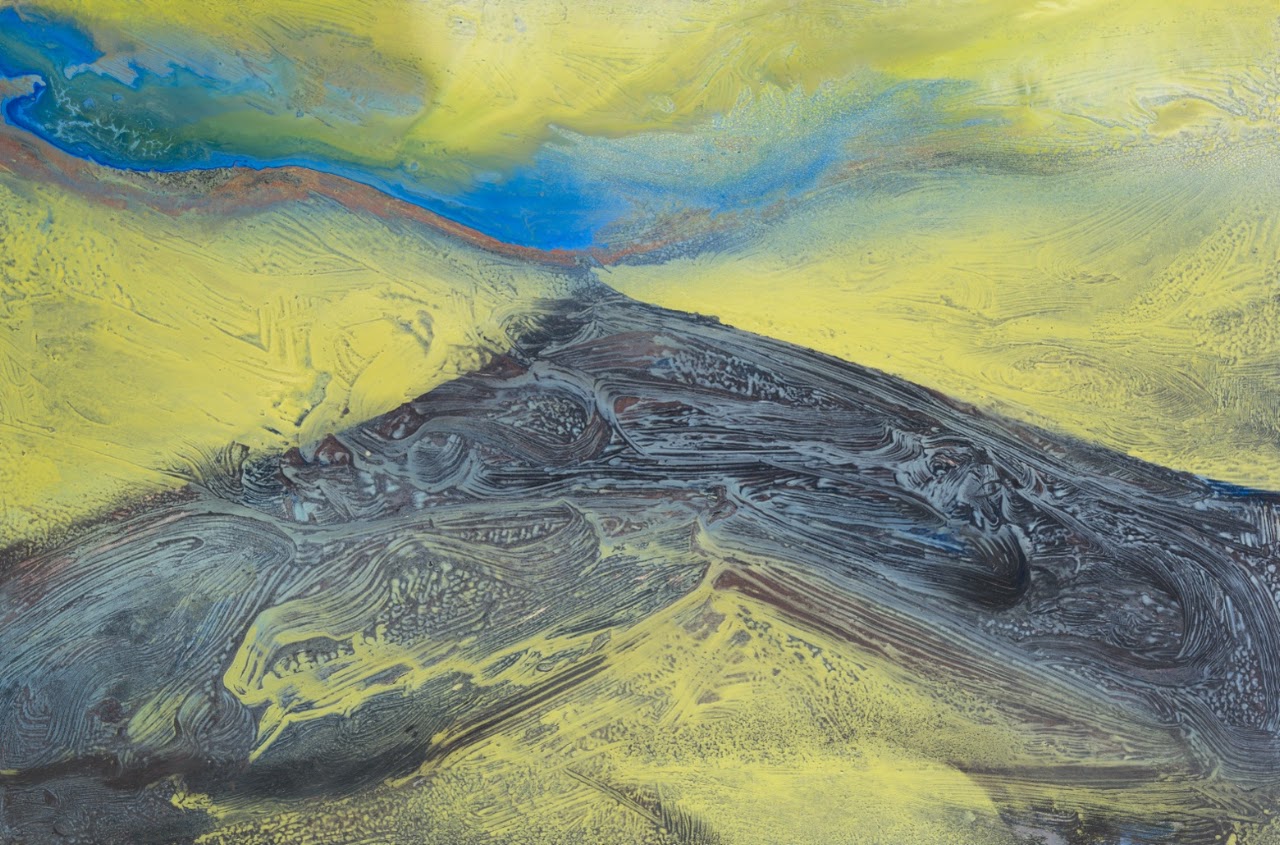
This work, created around 2010, marks a crucial turning point in Chen Tao-Ming’s artistic trajectory. It both continues his long-standing exploration of material and surface, and anticipates his later practice centered on the conditions of seeing. As such, it occupies a threshold between formation and transformation.
Between 1975 and 2003, Chen gradually withdrew from the exhibition system and turned to sustained experimentation on paper. During this period, he moved away from representation and formal construction, focusing instead on the behavior of materials—the seepage, accumulation, cracking, and layering of paint—allowing the surface to emerge as a field shaped by time and matter.
This work develops from that foundation. The traces on the surface—formed through dragging, scraping, and sedimentation—are no longer expressive brushstrokes, but residues of material movement and temporal suspension.
At this point, a decisive shift occurs: the operation of material begins to point toward seeing itself. The horizontal blue band across the center functions simultaneously as a fissure and an interface, reorganizing the visual field. The eye slides, hesitates, and reorients itself along this zone, and seeing becomes an ongoing process rather than a stable act.
Beneath this interface, a thin and uneven band of warm color emerges. Rather than a drawn boundary, it appears as a seam produced by the pressure between adjacent color fields. This seam prevents the blue from collapsing directly into the darker mass below, creating a perceptual layer with both depth and tension. Its intermittent visibility destabilizes the interface, turning it into a continuously forming visual threshold.
Color also undergoes a transformation. Warmer tones advance, while cooler tones recede, generating a floating spatial relationship. This space is not constructed through perspective, but emerges through perceptual response. When viewed through chromatic 3D glasses, these latent spatial relations are further activated.
The significance of this work does not lie in the completion of a stereoscopic effect, but in the integration of the conditions of seeing into the structure of the work itself. The image is no longer a passive object, but a perceptual field that comes into being through viewing.
Formally, a degree of structure remains. A darker mass at the bottom forms an upward thrusting triangular configuration, providing a sense of stability. Yet this structure is already beginning to loosen.
Around 2010, color still participates in the construction of form. However, after 2012, Chen Tao-Ming’s work undergoes a further shift: color gradually detaches from form and moves directly into the realm of perception, becoming the primary agent in generating space and visual fluctuation.
Seen in this light, this work exists in a state of threshold—maintaining structure while simultaneously destabilizing it. Accordingly, seeing undergoes a transformation: from recognizing form to experiencing space.
Ultimately, what this work presents is not a fixed image, but a perceptual field that continues to unfold through the act of seeing.
陳道明創作歷程中的一個關鍵轉折
這件2010年的作品,標誌著陳道明創作歷程中的一個關鍵轉折。它一方面延續藝術家長期對材料與表面的探究,另一方面亦預示其後期以「觀看條件」為核心的創作方向,因而處於生成與轉化之間的臨界位置。
1975至2003年間,陳道明逐步退出展覽體系,轉向長時間的紙上實驗。他不再關注圖像的再現,而轉向材料自身的運作——顏料的滲透、堆積、乾裂與覆蓋,使畫面成為由時間與物質生成的表面。
本作正是在此基礎上發展而來。畫面中的痕跡來自拖行、刮除與沉積,它們不再是表現性的筆觸,而是材料運動與時間停滯的殘留。
在此出現了一個關鍵轉向:材料的運作開始指向「觀看」本身。畫面中央橫向延展的藍色帶狀結構,如同裂縫與界面,使視線在其中滑動、遲疑並重新定位。
在此界面之下,一層極薄的暖色過渡帶隱約浮現。它並非描繪出的邊界,而更像色域之間相互擠壓所形成的接縫,使界面不再穩定,而成為一個持續生成中的視覺臨界區域。
色彩亦在此發生轉變。暖色向前,冷色後退,形成浮動的空間關係。這種空間並非透過透視建構,而是在觀看中生成。當觀者配戴色差立體眼鏡時,這種潛在的空間關係被進一步啟動。
因此,本作的重要性不在於立體效果本身,而在於它將「觀看條件」納入作品之中。畫面不再是被動的圖像,而成為一種需透過觀看才能成立的知覺場域。
在形式上,此作仍保有結構。下方深色量體形成向上推抵的三角構造,使畫面維持一定程度的穩定。然而,這種結構同時開始鬆動。
約在2010年前後,色彩仍參與形體的建立;但至2012年之後,陳道明的創作進一步轉變,色彩逐漸脫離形的依附,轉為主導空間與感知的生成。
從這個角度來看,這件作品正處於一種臨界狀態:一方面維持結構,另一方面又開始使其鬆動。觀看也因此發生轉變——從形的辨識,轉向空間的經驗。
最終,本作呈現的並非一個固定的圖像,而是一個在觀看中持續生成的感知場域。